Multimedia
Further resources, if available, can be found in our full bibliography.
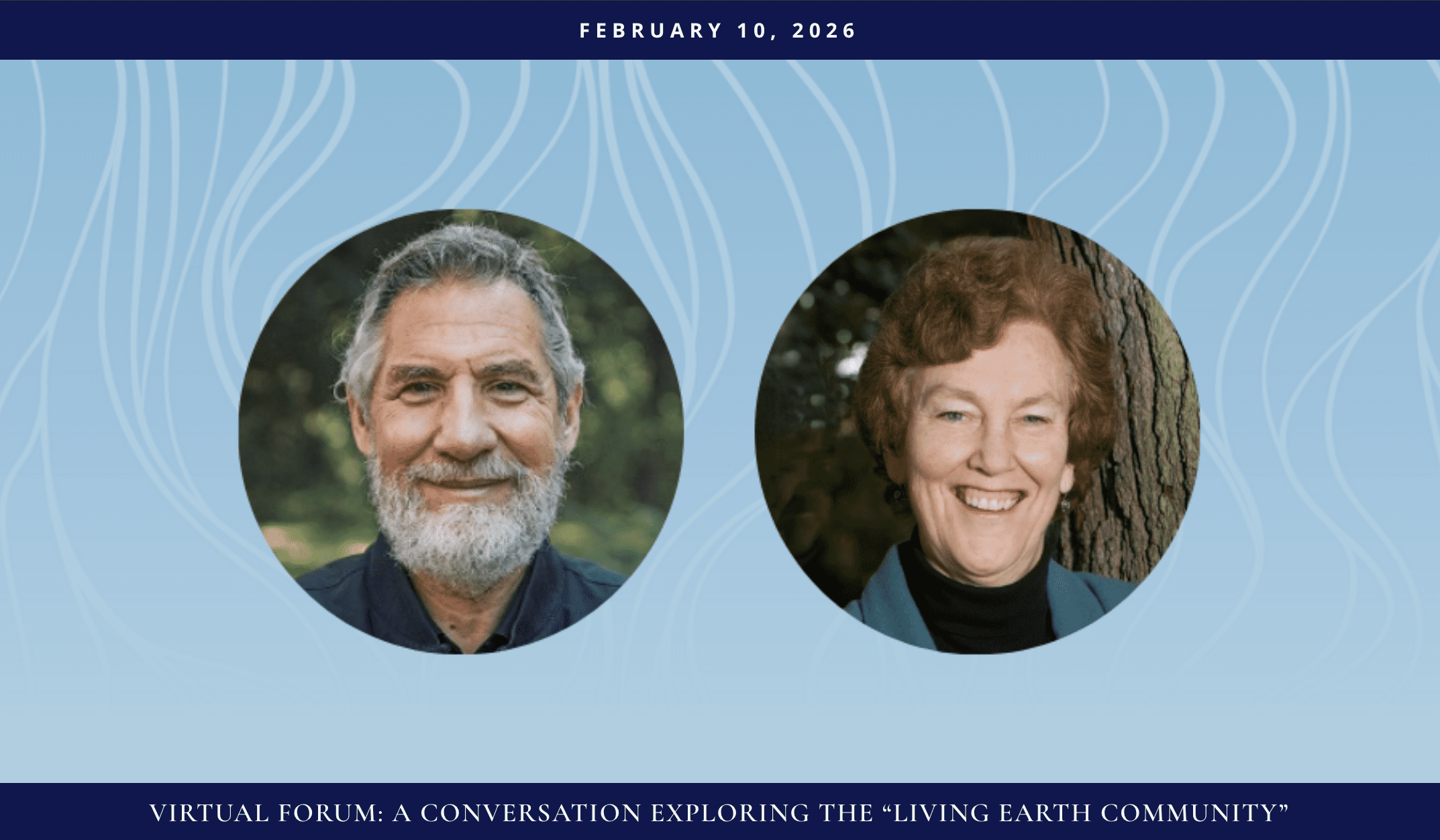
Garrison Institute
A Conversation Exploring the Living Earth Community
Jonathan F.P. Rose, founder of the Garrison Institute, sits down with Mary Evelyn Tucker and Tyler Mark Nelson to explore the ways that people around the world are celebrating and protecting biodiversity through science, law, and spirituality. They discuss how the vision of a living Earth community provides the moral power necessary to respond to on-the-ground ecological issues, especially those related to Earth Law and the Rights of Nature. Jonathan then facilitates a Q&A session which includes timely remarks by Mary Evelyn on the relevance of the Yale Forum’s work during the 250th year of the United States.
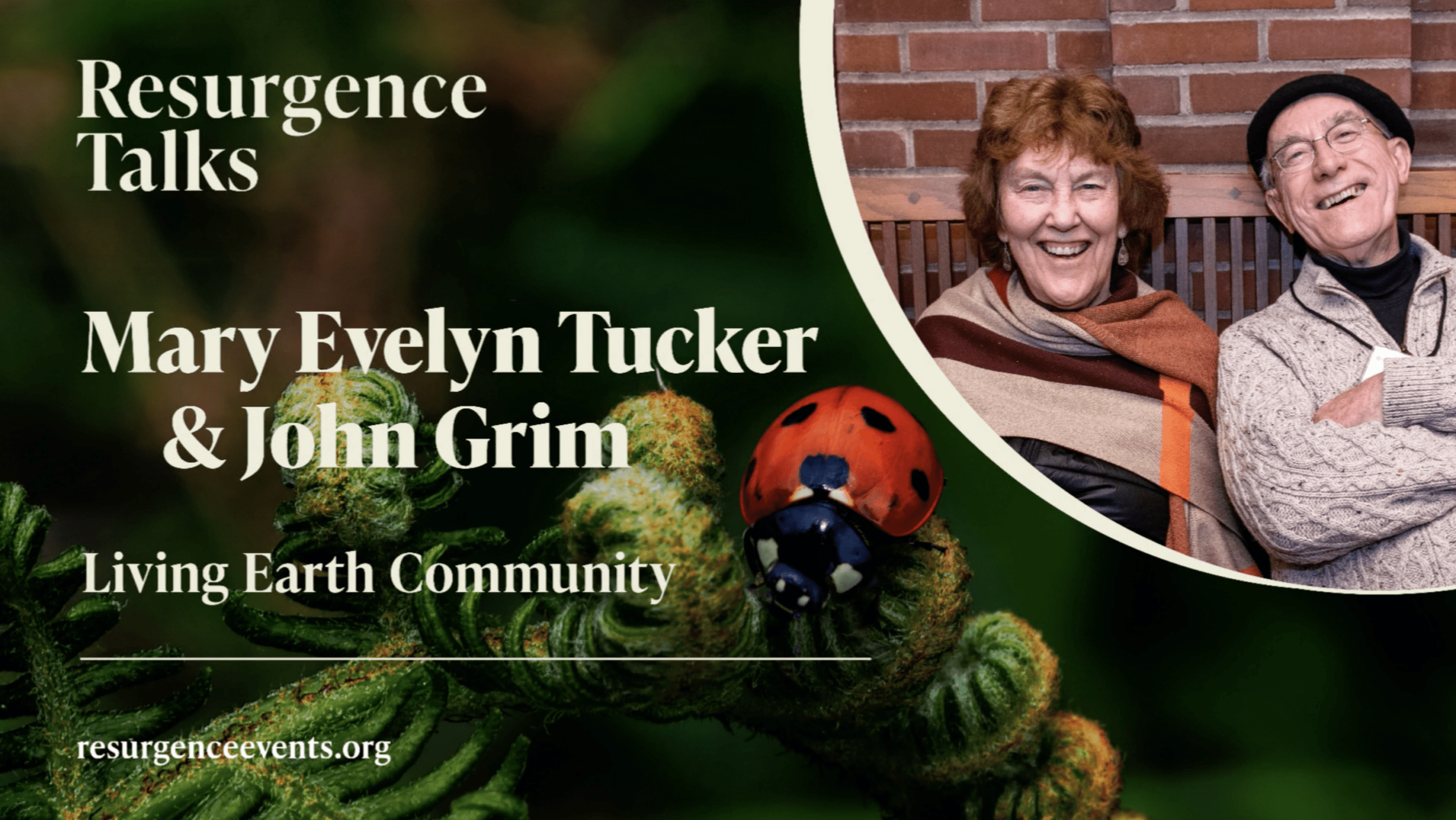
The Resurgence Trust
Resurgence Talk: Mary Evelyn Tucker and John Grim – ‘Living Earth Community’
In this Resurgence Talk, Georgie Gilmore speaks with Mary Evelyn Tucker and John Grim, co-directors of the Yale Forum on Religion and Ecology, about the Living Earth Community. This online knowledge commons is in the lineage of the Journey of the Universe, which situates humans in the vast, evolving universe in which life has arisen. It gathers scientific, spiritual, humanistic and legal perspectives on the liveliness, intelligence and creative capacities of the natural world, and it supports scholars, spiritual leaders, educators, artists, lawyers and changemakers exploring more-than-human ways of knowing. It also draws inspiration from Thomas Berry’s vision of the Great Work of our times to renew our sense of place in the dynamic life systems of the planet. As part of the work of Satish Kumar, The Resurgence Trust is an educational charity that seeks to bring about a just future for people and planet. Resurgence promotes ecological regeneration, social justice and spiritual fulfilment through a broad range of events and its publications.
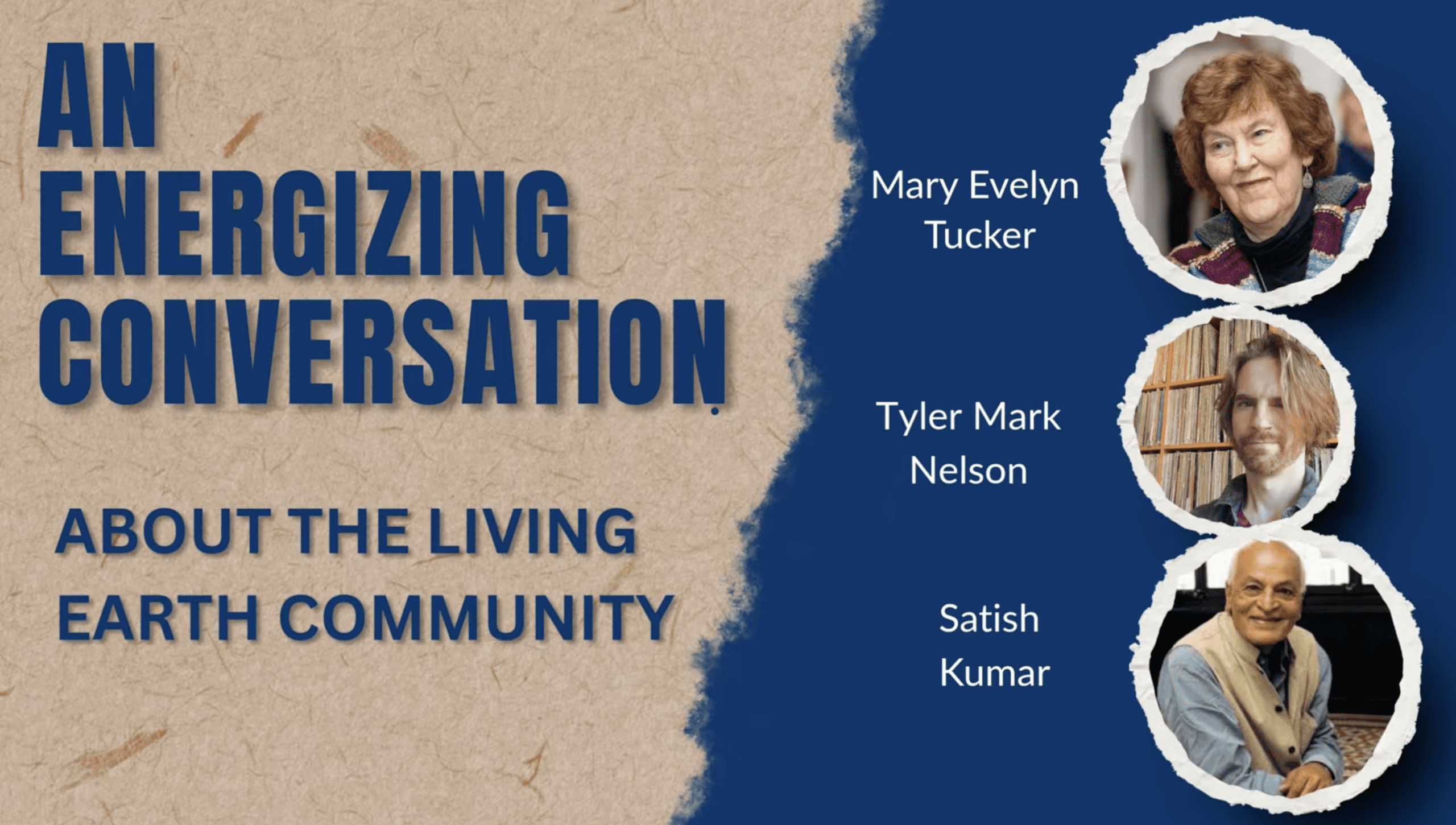
Yale Forum on Religion and Ecology
Living Earth Community Conversations: Satish Kumar with Mary Evelyn Tucker and Tyler Mark Nelson
In this conversation, Satish Kumar speaks about belonging, reverence, and responsibility in a world alive with intelligences. Satish is a co-founder of Schumacher College in England in 1990 as well as co-editor of the 60 year old Resurgence and Ecologist magazine. As a trailblazer in ecological education, he remains a key figure in expanding ecological awareness of the connections between human and more-than-human wholeness. The discussion moves beyond theory into lived relationship — recognizing members of the Earth community as kin, not resource; wisdom as practice, not abstraction; and ecological care as a moral and spiritual calling. Satish Kumar’s life and work offer a vision of hope rooted in simplicity, nonviolence, and deep listening to the more-than-human world.
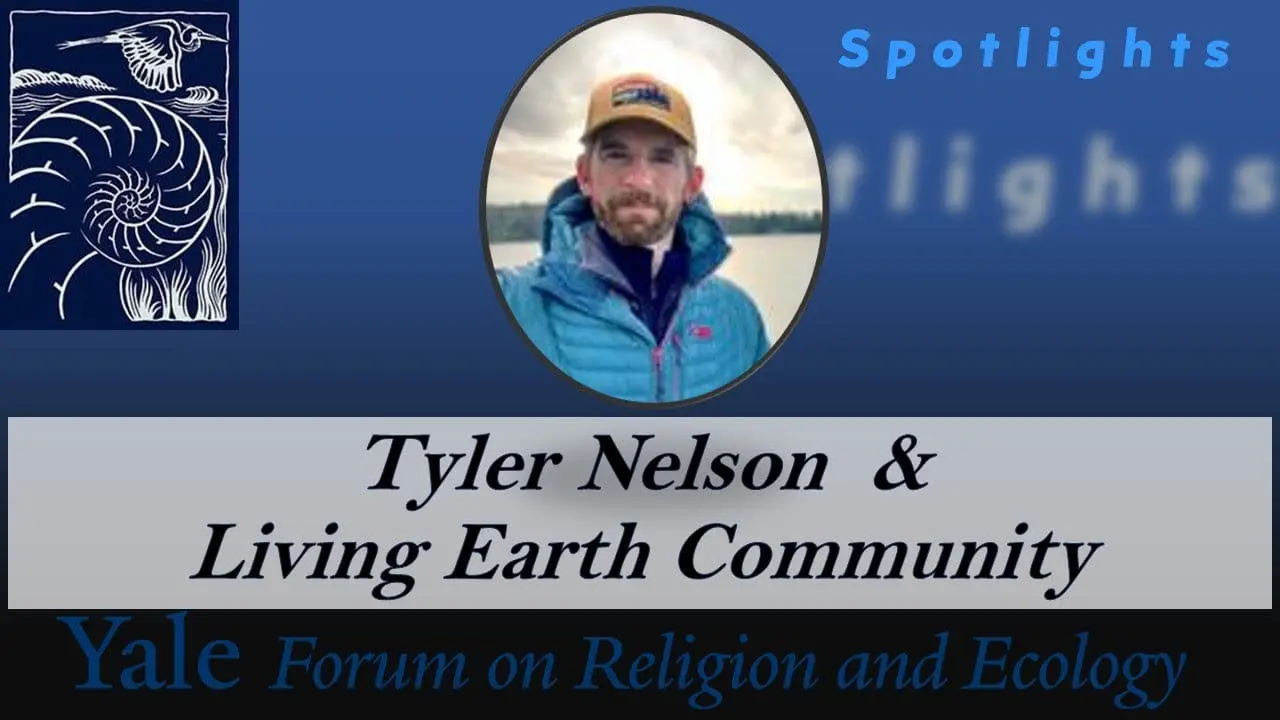
Yale Forum on Religion and Ecology
Spotlights, 6.2 Tyler Nelson and Living Earth Community
This episode of Spotlights features Tyler Mark Nelson, a core team member for the Yale Forum on Religion and Ecology. Tyler is an educator, eco-theologian, and artist exploring the ways that humans make sense of their creaturely existence in relation to the more-than-human world. Currently he is directing the exciting Living Earth Community program. We talk about his personal journey into the intersection of religion and ecology, as well as his key contributions to the Living Earth Community project. Tyler carries enthusiasm and creativity within his inquiries into the intelligences of nature, ecological worldviews, and Earth law.
Creation Spirituality Communities
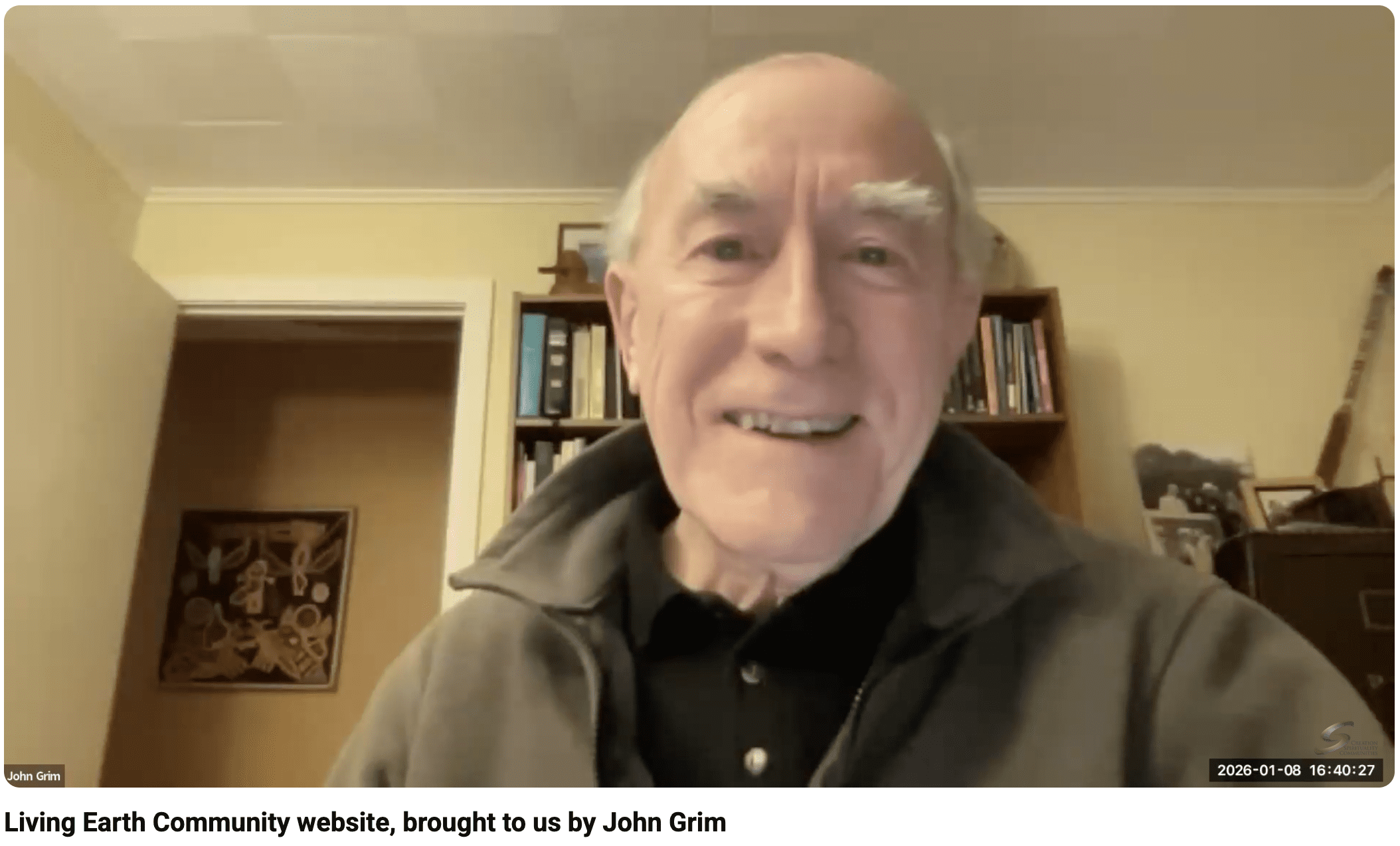
Living Earth Community website, brought to us by John Grim
Creation Spirituality Communities invites John Grim to offer an in-depth presentation on the origins and making of Living Earth Community website. A co-founder with Mary Evelyn Tucker of the Yale Forum on Religion and Ecology, John describes the three wings—Intelligences of Nature, Ecological Worldviews, Earth Law—and provides examples which demonstrate the exceptional qualities of the website. The video concludes with John answering thoughtful questions from the audience.
Yale Forum on Religion and Ecology, with Open Book Publishers
#Vlog Series: Living Earth Community: Multiple Ways of Being and Knowing
This video interview series in nine parts was produced by Open Book Publishers on the release of the volume, “Living Earth Community: Multiple Ways of Being and Knowing” by Sam Mickey, Mary Evelyn Tucker, and John Grim (eds.). This anthology examines the interplay between Nature and Culture in the setting of our current age of ecological crisis, stressing the importance of addressing these ecological crises occurring around the planet through multiple perspectives.
Photo Credit: Grassland in Yili, Xinjiang, China; Qingbao Meng/Unsplash