Fire and Water: Prescribed Burns, Traditional Indigenous Knowledge, and Restoration of Relationship
Author: Katie Grosh
Published: April 23, 2026
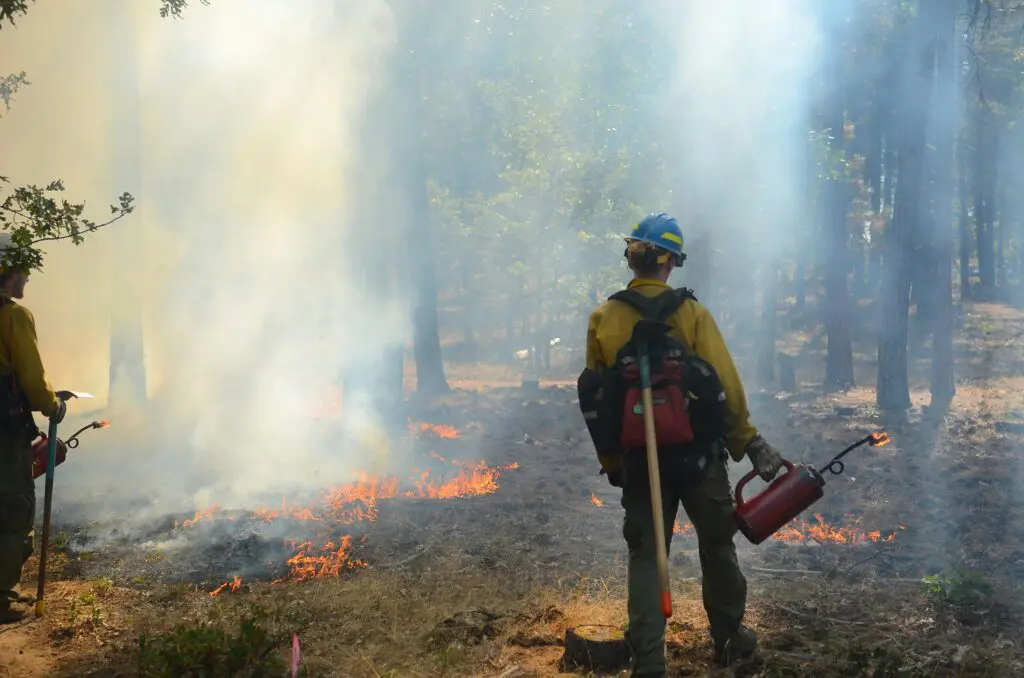
The smoke caught my eye before I saw the flames. Dark plumes wafted through the air and my curiosity got the better of me. I pulled into a nearby parking lot to see firefighters hard at work: not with waterhoses, but with blowtorches. They passed through the tall grasses, making sure all parts of the wetlands and hills were up in flames, and that things didn’t get too out of control. The sound of crackling, the shimmering heat, and the progression of the fire dancing over the landscape—I was mesmerized. Entranced, I watched safely from my car and recorded the footage below.
Prescribed burns are a land management practice with deep roots in this place. Anishinaabe, Indigenous peoples from around the Great Lakes, used fire as a tool for living with the land.
Fire promotes ecological biodiversity, helps to control non-native species, and creates different habitats for animals. The ash enhances the soil, returning nutrients to the ground. Regular smaller burnings also reduce the risk of big, out of control wildfires. There are some species of plants for whom fire is essential, like the Jack Pine, whose pinecones only open up their seeds when exposed to the heat of flame. The use of fire, through controlled burning, is an awesome example of Traditional Ecological Knowledge (TEK).
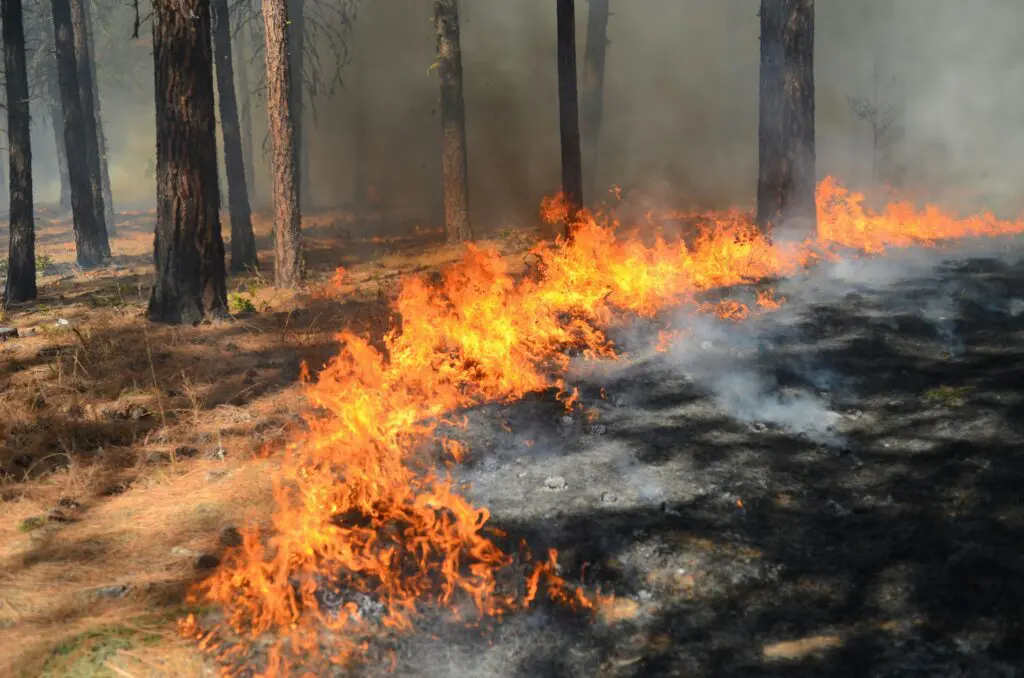
Our theme for this month at Living Earth Community is water, which is why an article about fire might seem ironic. However, these two forces of nature have a lot in common. Both fire and water have the power to shape landscapes — whether quickly from a wildfire or flood, or slowly over many years, as layers of ash accumulate in the soil or rivers cut through stone. Fire and water are both necessary, yet need to be in balance over time. Too little or too much of either will wreck havoc on the ecosystem.
As my colleague Nikki Woods astutely wrote, “Prescribed burns…are part of the same cycle of renewal that water is. Many Indigenous traditions hold fire and water together as complementary forces — both are cleansers, both are givers of life, both require relationship and respect to work with safely…fire and water are partners in the living world.”
For many decades, the Europeans who colonized Turtle Island abandoned and suppressed Indigenous prescribed burn practices, to detrimental effect (including out-of-control wildfires and loss of biodiversity). My local community also struggles with legacies of water mismanagement, from the Flint water crisis and the newly designated EPA Superfund site for the 1,4-dioxine plume, to the current fight against Oracle’s water-guzzling, hyperscale data center. I find hope in practices that tangibly help our watershed, allow us to reckon with the harms of the past, and create a better future. Prescribed burns are one way that I see restoration of relationship in my local community. Acre by acre, we honor Traditional Ecological Knowledge and care for the human and more-than-human world alike.
I returned to the prescribed burn site about two weeks later and gave a video update. At the time, not too much was happening — the ground still smelled smokey from the fire, it was wet from days of heavy rain, and nothing green had sprung up yet. However, from years past, I know this land thrives with beautiful wildflowers and creatures like birds, frogs, squirrels, and butterflies who call it home. I just need to be patient. The saying goes, “April showers bring May flowers,” but it is also true that the fire this spring will bring flourishing to the ecosystem this summer. I look forward to returning to the area and continuing to see how fire and water shape and heal this small patch of land in my community.