Plants: Journals & Articles
Further resources, if available, can be found in our full bibliography.

Plant Signaling and Behavior
2006-Present
Plant Signaling & Behavior includes new research on signal perception and transduction, integrative plant physiology, and information acquisition and processing. Plant Signaling & Behavior fosters an understanding of complex plant communications. The journal examines different levels of biological organization through the integration of molecular biology with physiology, phenomenology, and plant behavior.

"‘My ideas are a little revolutionary’: Ecologist Suzanne Simard on Intelligent Forests, the Climate and Her Critics"
Sophie McBain
Ecologist and writer Suzanne Simard speaks about the challenges she has faced since presenting her research on the intelligences of forests, along with the opportunities for better understanding. Despite scientific backlash, Simard’s work focuses attention on the connections, communications, and relationships between trees and other forest beings. In this article, she describes why the limitations of mainstream scientific perspectives and approaches are too confining to understand the larger network of relations which exist in a forest.

"Induced Resistance to Herbivory and the Intelligent Plant"
André Kessler, Michael B. Mueller
Plant induced responses to environmental stressors are increasingly studied in a behavioral ecology context. This is particularly true for plant induced responses to herbivory that mediate direct and indirect defenses, and tolerance. These seemingly adaptive alterations of plant defense phenotypes in the context of other environmental conditions have led to the discussion of such responses as intelligent behavior. Kessler and Mueller consider the concept of plant intelligence and some of its predictions for chemical information transfer in plant interaction with other organisms. Within this framework, the flow, perception, integration, and storage of environmental information are considered tunable dials that allow plants to respond adaptively to attacking herbivores while integrating past experiences and environmental cues that are predictive of future conditions. The predictive value of environmental information and the costs of acting on false information are important drivers of the evolution of plant responses to herbivory. They identify integrative priming of defense responses as a mechanism that allows plants to mitigate potential costs associated with acting on false information. The priming mechanisms provide short- and long-term memory that facilitates the integration of environmental cues without imposing significant costs. Finally, the authors discuss the ecological and evolutionary prediction of the plant intelligence hypothesis.

"Plant Sentience? Between Romanticism and Denial: Science"
Miguel Segundo-Ortin, Paco Calvo
A growing number of non-human animal species are being seriously considered as candidates for sentience, but plants are either forgotten or explicitly excluded from these debates. In Segundo-Ortin and Calvo’s view, this is based on the belief that plant behavior is hardwired and inflexible and on an underestimation of the role of plant electrophysiology. They weigh such assumptions against the evidence to suggest that it is time to take seriously the hypothesis that plants, too, might be sentient. They hope this target article will serve as an invitation to investigate sentience in plants with the same rigor as in non-human animals.

"Finding the Mother Tree: An Interview with Suzanne Simard"
Emmanuel Vaughan-Lee
In this in-depth interview, Suzanne Simard–the renowned scientist who discovered the “wood-wide web”–speaks about Mother Trees, kin recognition, and how a person may heal their separation from the living world.

The philosopher Michael Marder has asserted that animist engagement with plants involves a projection of human purposes and goals leading to veneration. He has also argued that an extension of a categorical concept of personhood underpins Matthew Hall’s previous work on plant personhood. This paper draws on the growing scholarship of animist traditions following the work of Hallowell to reject Marder’s characterization of a naïve animist approach to plants. It draws on these insights from animist traditions to outline a relational plant personhood, which is fully realized only in grounded, situated relationships of care that seek to enable the flourishing of plants.
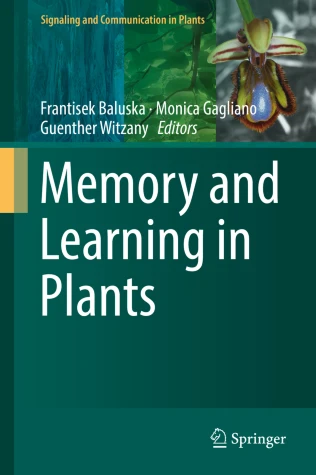
"Mycorrhizal Networks Facilitate Tree Communication, Learning, and Memory"
Suzanne W. Simard
Frantisek Baluska, Monica Gagliano, Guenther Witzany
This paper by Simard presents key information on mycorrhizal networks in forests. Mycorrhizal fungal networks in forests facilitate inter-tree communication through resource, defense, and kin recognition signaling, influencing neighbors’ sophisticated behaviors with cognitive qualities like perception, learning, and memory, crucial for plant fitness. The network topology resembles neural networks, enhancing local and global efficiencies akin to intelligence systems. Interconnecting fungal species exhibit exploration strategies resembling crystallized and fluid intelligence, vital for memory-based learning. Biochemical signals transmitted via these networks provide resource subsidies, particularly benefiting regenerating seedlings. Examples include enhanced seedling survival and growth, boosted defense chemistry, and collective memory interactions among trees, fungi, wildlife, and humans, promoting forest ecosystem health. Understanding tree cognition and microbiome interactions offers a holistic approach to studying ecosystems, fostering human empathy for forest conservation and ecosystem well-being.
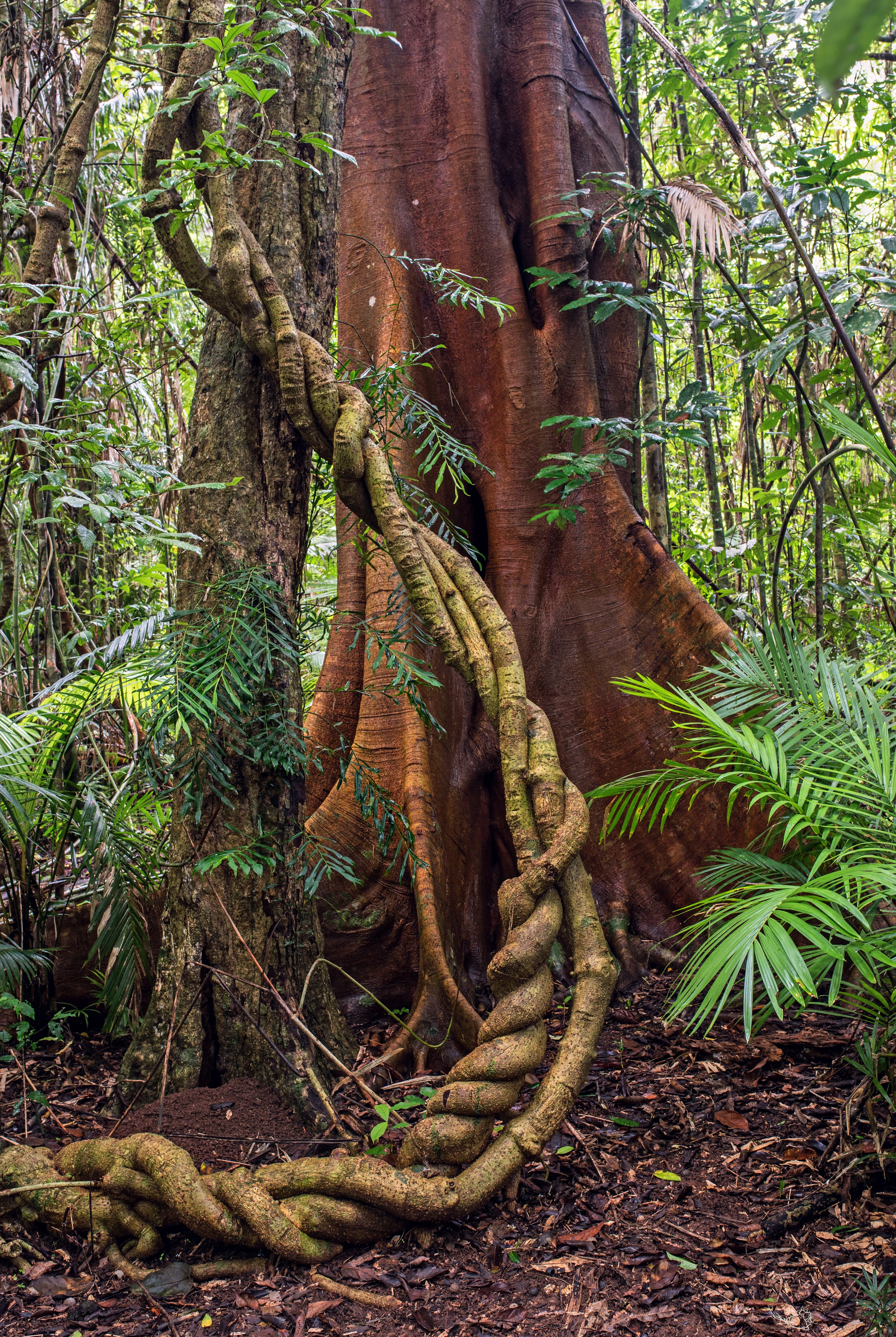
"The Plant in Between: Analogism and Entanglement in an Italian Community of Anthroposophists"
Nadia Breda
The article analyses the special relationship with the world of plants developed by anthroposophy from the framework of a new perspective called the “plant turn” (Myers 2015). Anthroposophy (AS) is analysed as a peculiar form of Analogism (Descola 2005), historically derived from the philosophy of Rudolf Steiner and subsequently evolved into contemporary AS practices that the author encountered during her fieldwork in a community of North-Eastern Italy. Both Steiner’s texts and the analysis of contemporary practices of AS reveal a relationship with the world of plants that the author reads in light of Ingold’s categories of “interweaving” of the world, the interpenetration of elements, and their ceaseless becoming (Ingold 2011). The result is a representation of the vegetal world involving the whole cosmos, humans and non-humans, terrestrial and celestial, in a cosmic expansion of the relations between beings typical of Analogisms. The practices referring to the vegetal world enacted by anthroposophists are intense, engaging, dialogue-based and provocative in their ability to uproot many elements of naturalism and deal with a contemporary world characterised by ecological crisis.

"Plant Neurobiology: An Integrated View of Plant Signaling"
Eric D. Brenner, Rainer Stahlberg, Stefano Mancuso, Jorge Vivanco, František Baluška, Elizabeth Van Volkenburgh
Plant neurobiology is a newly focused field of plant biology research that aims to understand how plants process the information they obtain from their environment to develop, prosper and reproduce optimally. The behavior plants exhibit is coordinated across the whole organism by some form of integrated signaling, communication and response system. This system includes long-distance electrical signals, vesicle-mediated transport of auxin in specialized vascular tissues, and production of chemicals known to be neuronal in animals. Brenner et al. review how plant neurobiology is being directed toward discovering the mechanisms of signaling in whole plants, as well as among plants and their neighbors.

"Mycorrhizal Links Between Plants: Their Functioning and Ecological Significance"
E.I. Newman
This paper is pivotal in ecology for elucidating the role of mycorrhizal networks in plant interactions. Newman introduced the concept of these networks, highlighting how mycorrhizal fungi connect plants underground, enabling nutrient exchange and potentially even carbon transfer between different species. This interconnectedness enhances plant fitness, community dynamics, and ecosystem resilience by redistributing essential resources based on environmental conditions and plant needs. Newman’s research underscored the complex interactions belowground that influence aboveground vegetation patterns and ecosystem processes. It laid a foundation for understanding the ecological significance of mycorrhizal networks in nutrient cycling, plant succession, and biodiversity maintenance. The study continues to influence research on plant-microbe interactions, ecosystem functioning, and strategies for sustainable land management in the face of environmental changes.
Photo Credit: Forest in Warburton, Australia; Arnaud Mesureur/Unsplash