Sacred Foods and Winter Dance Ceremonies
John Grim Published: February 17, 2026
In this blog post: John Grim, co-director of the Yale Forum on Religion and Ecology, reflects on ceremonial foods in light of reading Turtle Island: Food and Traditions of the Indigenous Peoples of North America (New York: Clarkson Potter, 2025), authored by Sean Sherman, Kate Nelson, and Kristen Donnelly.
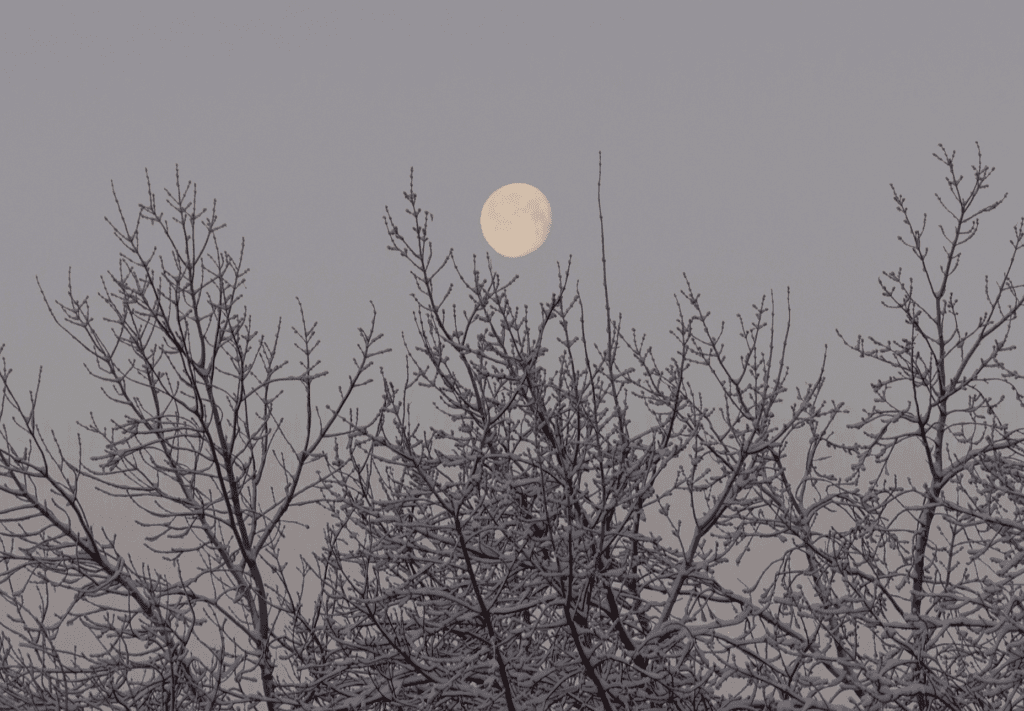
Some years passed before I was able to articulate my sense of the connections between the sacred foods and the Winter Dance ceremonial of the Interior Columbia River Salish peoples. The Louie family graciously invited me to their Winter Dance in Inchaliam, Washington, from 1985 to 2005. For four days during the deep of winter, this beautiful ritual, beginning at dark of the first day, celebrates human interactions with the living Earth community of that region.
Near midnight, water is brought to the lodgepole pine tree firmly anchored into the floor of the Winter Dance hall while rising to a fixed box set in the ceiling. That centering pole symbolizes, and becomes, “the world” around which all life moves – plants, spirits, animals, weather, insects, clouds, humans. Each Winter Dance night-into-the-morning, singers come to that cosmic center and sing their sacred songs and speak to the community about what’s on their minds.
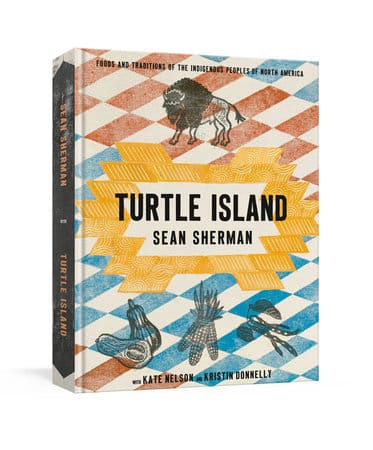
At midnight each day as water is carried in, the four sacred foods – dried deer meat and salmon, bitterroot, and camus root – are handed out to all those attending. It was while reading Turtle Island: Food and Traditions of the Indigenous Peoples of North America that I recalled again my sense of wonderment with these sacred foods. In eating dried deer and salmon foods and the root crops along with drinking water at the sacred centering tree, those attending the Winter Dance renew themselves as they renew the living world. These Winter Dance ceremonies are old, they are unique to Interior Salish and other Indigenous peoples of the interior Columbia River region, and they continue into the present.
Something about the deep cycle of foods eaten, songs sung, healings evoked, and spirit-kinship renewed knits the human into the larger spiritual web of the living Earth community. That weave, that knitting, those nourishing connections manifest along the chain of life and are also very old. As we humans mature in our evolutionary journey we awaken to that something again and again each day in myriad ways. In these lifeways of orienting ourselves through foods and community meals, we participate in the sacred flow of life.
Learn more about Sean Sherman, Kate Nelson, and Kristen Donnelly’s cookbook, Turtle Island: Food and Traditions of the Indigenous Peoples of North America (New York: Clarkson Potter, 2025), on the publisher page.
For further reading on the Winter Dance, see John’s article: “Cosmogony and the Winter Dance: Salishan Ethics in Transition,” Journal of Religious Ethics vol. 20, no. 2 (Fall 1992): 389-413.