
Reflection on the Rights of Manoomin
Tyler Nelson Published: March 6, 2026
Within the wetlands, inland lake shorelines, and shallow rivers of northern Minnesota grows an aquatic grass which produces a nutrient-dense seed. Wild rice, or what the Ojibwe call manoomin [mah-NO-men], is an important food in the region and has become the focus of the Rights of Nature movement. It has sustained communities over thousands of years. It also happens to be one of my favorite foods.
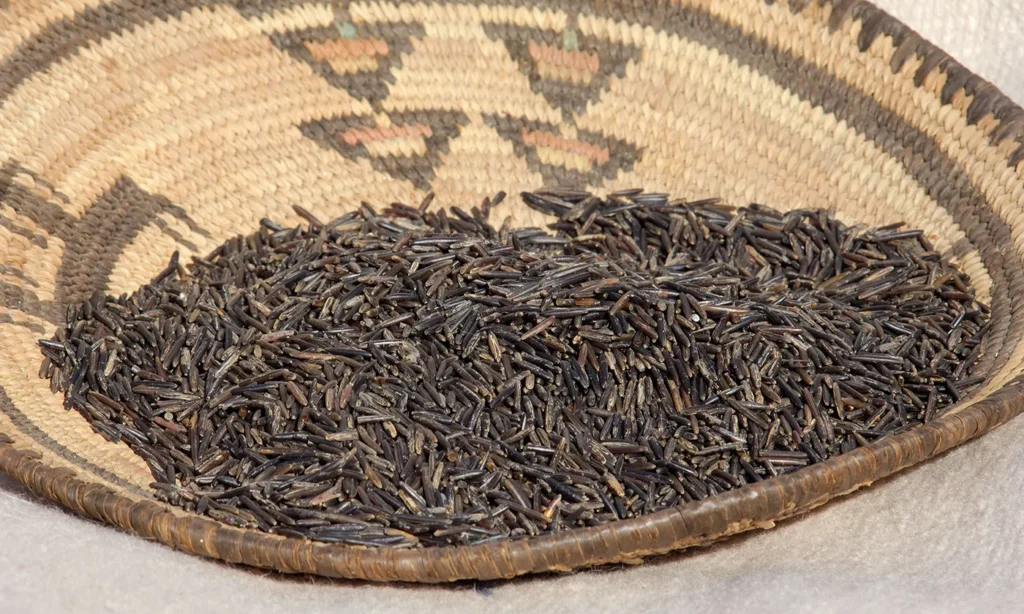
From morning porridge with wild rice, cranberry, and walnuts, to a bowl of creamy wild rice stew with foraged mushrooms in the evening, my diet would feel incomplete without manoomin. When I prepare wild rice for a meal—measuring, boiling, cooking—I do so with gratitude for the grasses and waters from which it came. Through imperfect, clumsy, but always earnest ways, I attempt to honor the Ojibwe tribes who harvest it.
As a Minnesotan now living in the Northeast United States, I only stock my pantry with wild rice harvested by the Red Lake Band of Chippewa. Manoomin is culturally, spiritually, and economically valuable to them. Equally important is the continuation of Indigenous-led stewardship of the interdependent ecosystems within which manoomin is an essential member.
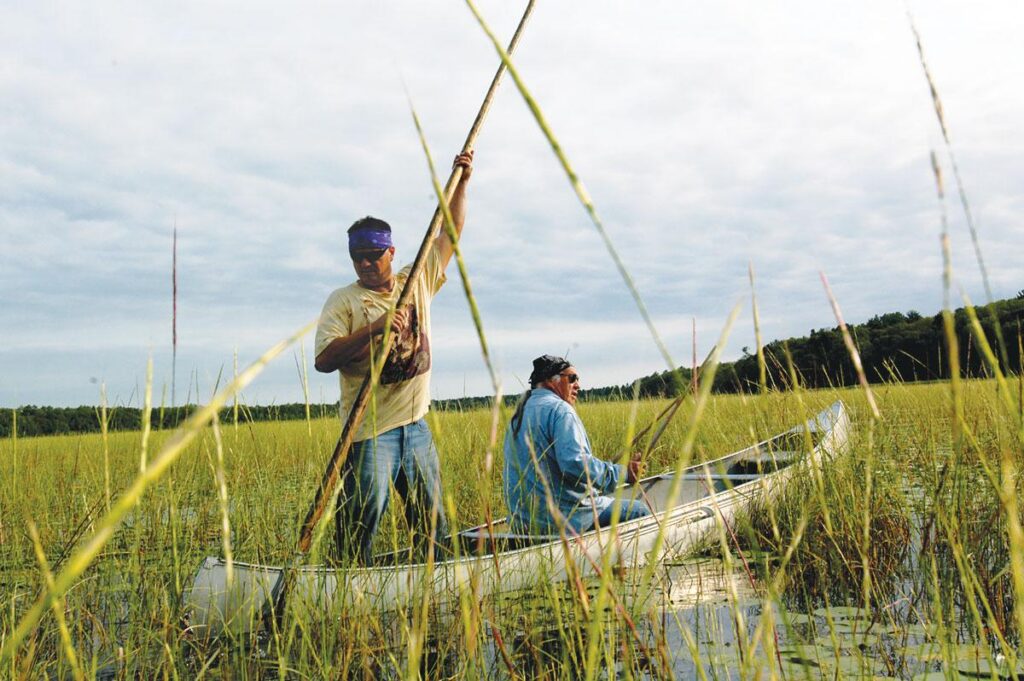
Photo by Vickie Kettlewell, American Indian Magazine
Manoomin is a sacred food to the Ojibwe. The autumn harvest of manoomin involves cultural practices of storytelling that only occur during that season. Other songs, dances, rituals, and ceremonies require manoomin and water. Threats against manoomin are threats against the Ojibwe. Erma Vizenor, Tribal Chairwoman of the White Earth Nation, writes:
Manoomin is inextricably bound to the religion and identity of the Anishinaabeg. This is why these threats are potentially so devastating and why it is essential that the sanctity and integrity of this plant be preserved. If artificially produced or engineered varieties of wild rice were to compromise the wild manoomin that has existed in the lakes for thousands of years, it will compromise the Anishinaabe people and our way of life.
Thankfully there are Indigenous groups committed to protecting manoomin through science-based and legal approaches, including Earth Law. In 2018, the White Earth Band of Ojibwe and the 1855 Treaty Authority adopted the Rights of Manoomin Resolution. It is the first law to recognize the legal rights of a plant species through Indigenous tribal government. The resolution grants that manoomin “within the White Earth Reservation possesses inherent rights to exist, flourish, regenerate, and evolve, as well as inherent rights to restoration, recovery, and preservation.” Then in 2021, the White Earth Band and manoomin jointly filed a case in tribal court to enforce these rights, thus modeling the potential strength of Earth law. Now the Rights of Manoomin Resolution awaits a vote in the Minnesota State Legislature.