A Collection of Quotes from Robin Wall Kimmerer
Katie Grosh Published: March 19, 2026
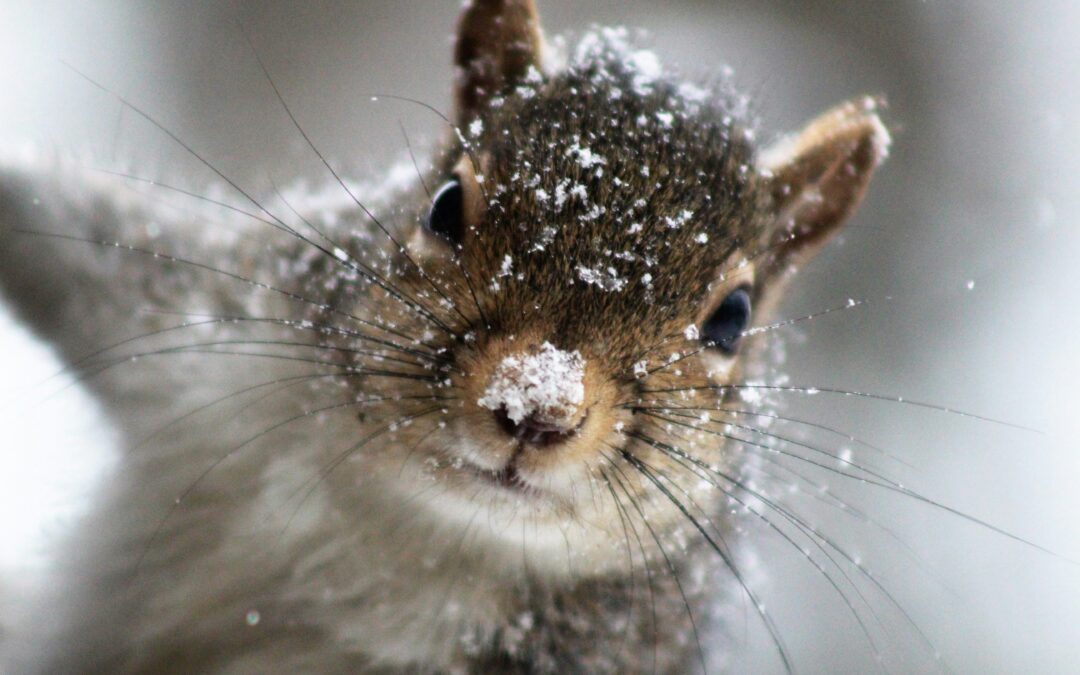
I pull my phone out and hit record as soon as I see the squirrels. Playfully frolicking in the snow, they seem to delight in the winter wonderland as much as I do. It is the first big snow of the year, and the colorful fall leaves are still holding tightly to the trees. The water in the stream hasn’t frozen over yet, and the sound is soothing as it rushes over the rocks. It feels good to be outside, noticing the beauty of this place in this season, along with my squirrel friends. It brings to mind a piece of wisdom from Robin Wall Kimmerer: “All flourishing is mutual.”
As I shared last month, good stories have accompanied me throughout my life (often in the form of books). This month, as we celebrate Women’s History Month and explore the theme of Indigenous Ecological Wisdom, I have been returning frequently to readings from Braiding Sweetgrass: Indigenous Wisdom, Scientific Knowledge, and the Teachings of Plants by Robin Wall Kimmerer. Her book weaves together perspectives from the Potawatomi Nation’s teachings, Kimmerer’s training as a botanist, and a deep, personal, poetic relationship with place, plants, and the more-than-human world more generally.
The quotes below, shared in video form, are just a taste of the rich insights fleshed out in the chapters of Braiding Sweetgrass.
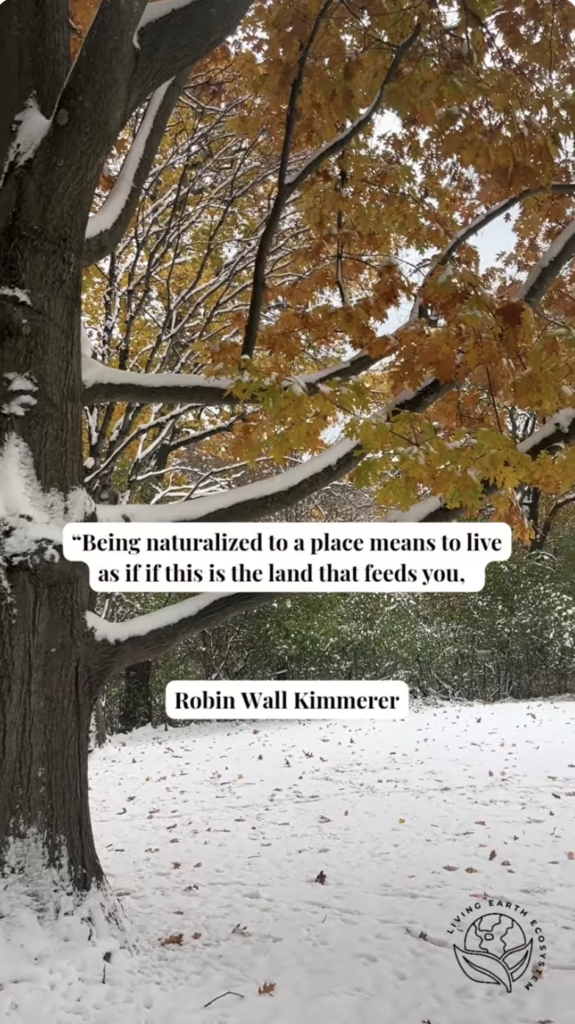
I filmed this video during a trip around Ontario, Canada, a place where my ancestors lived for a few generations while on their way to the United States from England, Scotland, and Ireland. This was the land that fed them, these were the waters they drank, and this is the ground where some are buried. As I walked through High Park on that snowy day, I admired the tenacious leaves still hanging onto the trees, like I admire the survival of these Potawatomi teachings which persist despite the devastating horrors of colonization.
As a non-native person on this native land, I appreciate Kimmerer’s call to become naturalized to place: to practice the same respect and care for the Earth community where one lives as if they were Indigenous. Her book taught me that naturalization to place requires a person to live into this way of being. I seek to embody this way where I live in Michigan, and I hope that my future generations will continue to care for the Great Lakes watershed.
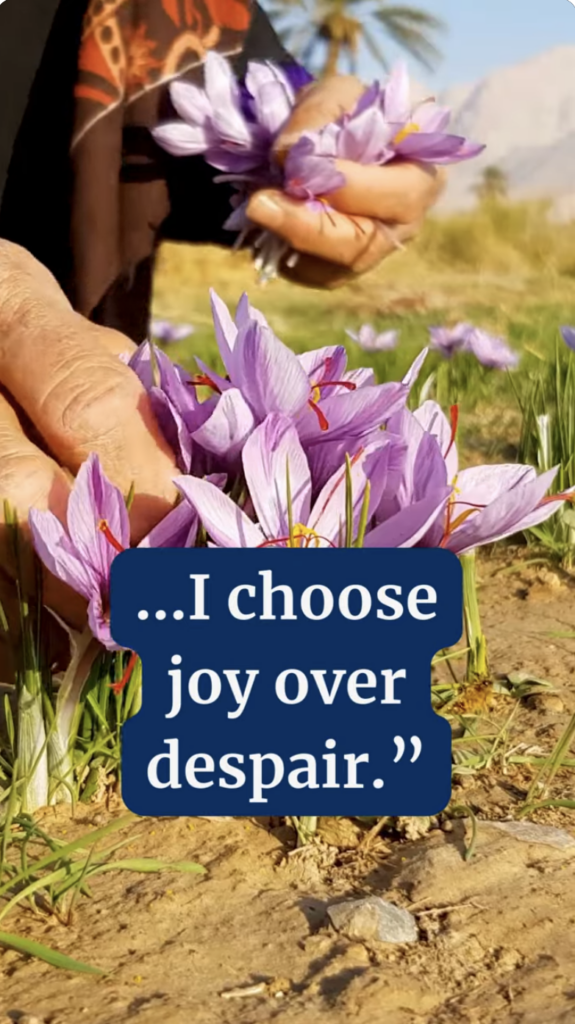
Kimmerer doesn’t shy away from talking about environmental and human injustices, nor the degradation of ecosystems. While these issues may be overwhelming, there is ultimately hope, as plant communities demonstrate restoration and healing over time. Plants improve the soil, filter water, release oxygen, and offer us medicine and food. This short video highlights positive relationships between humans and the more-than-human world, using images that radiated abundance, beauty, and peace. It includes visuals of foraging and a concluding shot of olives, a symbol of peace.
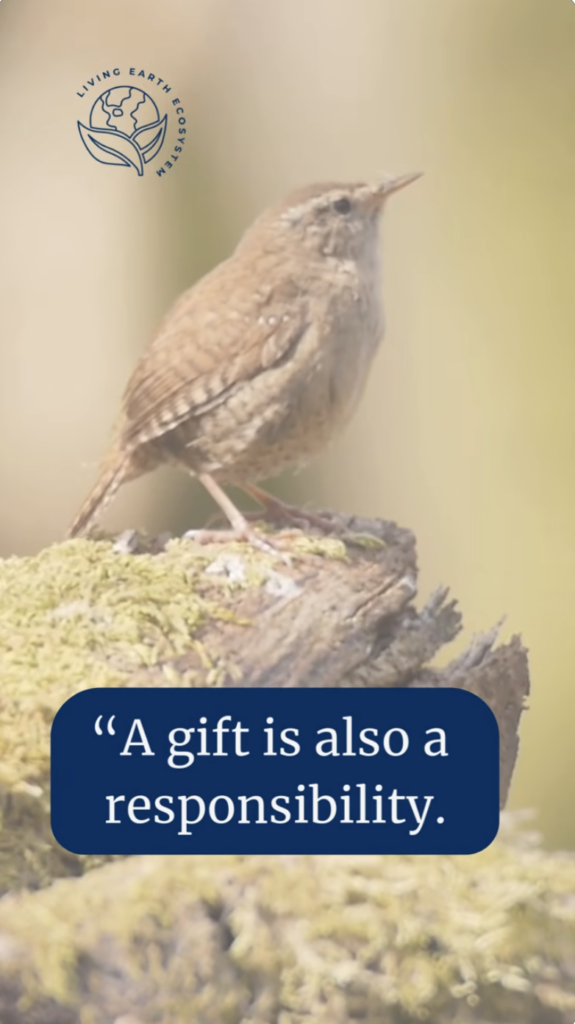
Kimmerer also writes about gifts and responsibilities. Each member of the Earth community must use our unique abilities and talents for the mutual benefit of the world. We are also called to appreciate the gifts of others, such as listening to the birds greet the morning using their unique gift of song.
Kimmerer concludes that one particular gift humans have is words. She writes: “Language is our gift and our responsibility. I’ve come to think of writing as an act of reciprocity with the living land” (Braiding Sweetgrass, 347). I would broaden this to other creative endeavors, too: gifts of art, music, dance, and poetry. As part of the Marketing team for the Yale Forum on Religion and Ecology, I hope to use my eye for design and video editing to inspire others, cultivate deeper understandings of the world, and amplify other voices in the field.
I give thanks for the gifts of Dr. Kimmerer’s words. Pick up a copy of Braiding Sweetgrass from your favorite local bookstore, or dive into other Ecological Worldviews on the Living Earth Community website to learn more.