Plants: Books
Further resources, if available, can be found in our full bibliography.
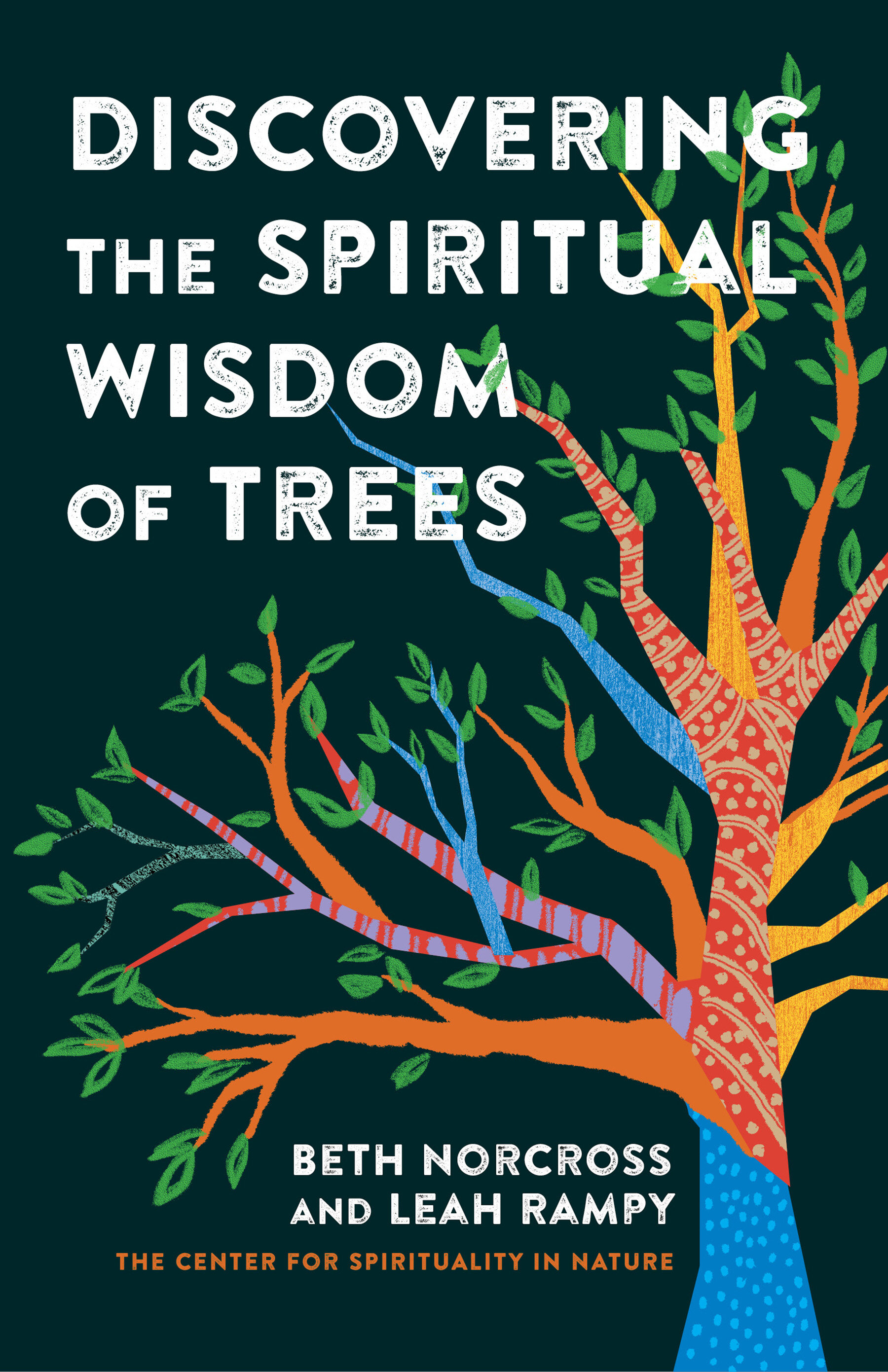
Drawing on extensive experience in both forest ecology and spirituality, Norcross and Rampy invite readers into a deep mutual relationship with trees, whose wisdom provides comfort, resilience, guidance, and hope during these challenging times. Living amid the uncertainty of climate chaos and biodiversity loss, humans experience loneliness, anxiety, grief, and fear. Such times call them to a fuller spiritual presence, richer connections to the world around, and a deeper knowing that all are held within a sacred web of life. Pulling from the Center for Spirituality in Nature organization’s coursework, Norcross and Rampy offer guidance and practices based on their experiences leading walks, retreats, and pilgrimages for over two decades. Having witnessed the profound healing and restorative power of trees, they offer the wisdom of trees as wordless ministers to weary souls. When readers learn the ecology of the forest and how to be present in nature, their eyes are opened to the awe and wonder of the world, deepening their sense of sacred oneness.
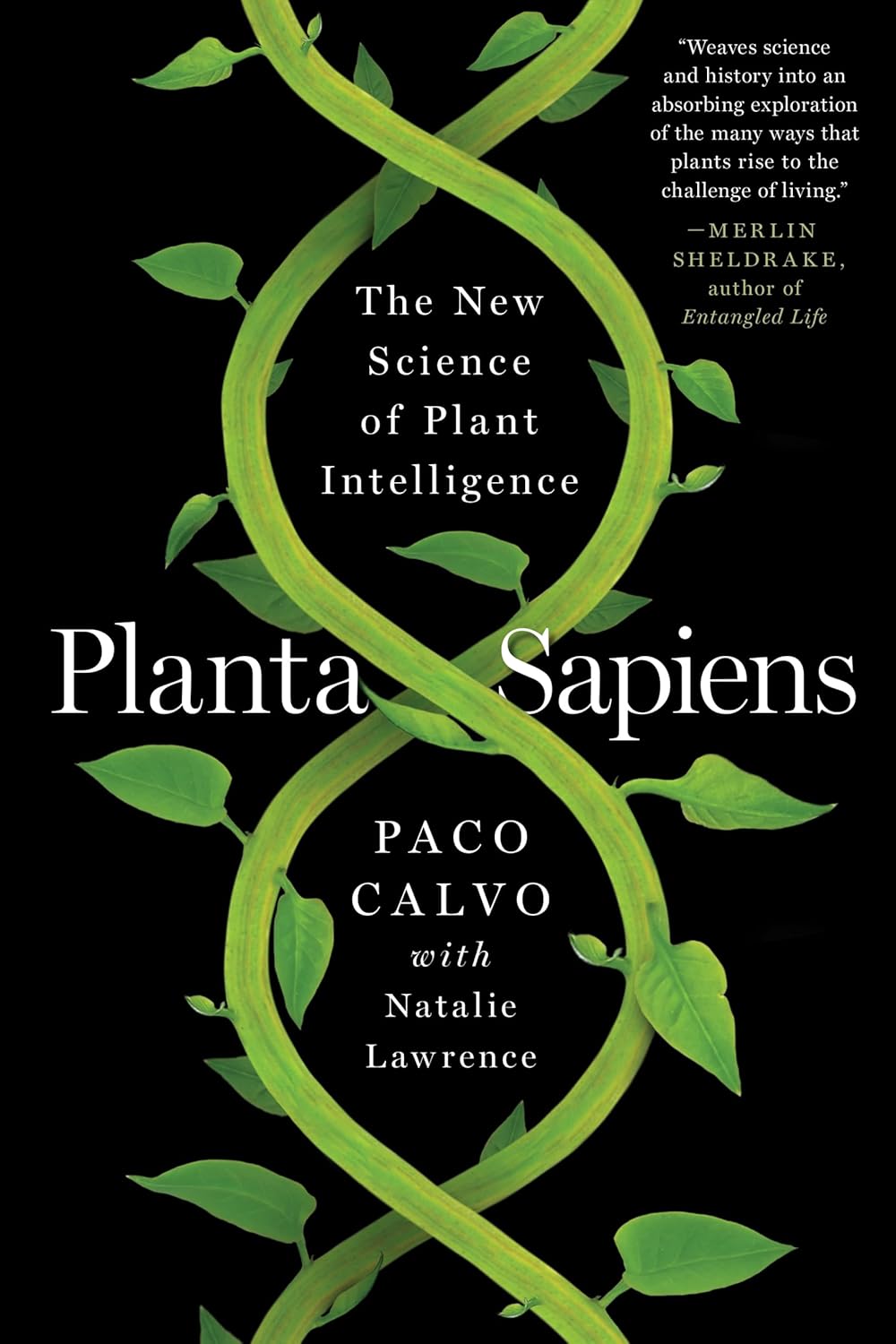
Planta Sapiens: The New Science of Plant Intelligence
Paco Calvo, Natalie Lawrence
W.W. Norton & Company
2024
In Planta Sapiens, Paco Calvo shows for the first time how humans can use tools developed to study animal cognition in a quest to understand plant intelligence. Calvo also illuminates how plants inspire technological advancements, from robotics to AI. Most importantly, he demonstrates that plants are not objects: they have their own agency. If humans recognize plants as actors alongside them in the climate crisis–rather than seeing them simply as resources for carbon capture and food production–plants may just be able to help to tackle the most urgent problems.
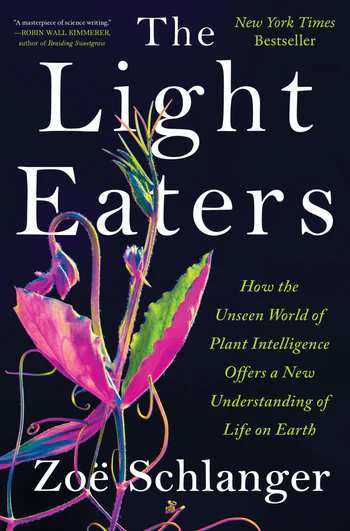
The Light Eaters is a deep immersion into the drama of green life and the complexity of this wild and awe-inspiring world that challenges how humans understand agency, consciousness, and intelligence. In looking closely, observers see that plants, rather than imitate human intelligence, have perhaps formed a parallel system. Examining the latest epiphanies in botanical research, Zoë Schlanger spotlights the intellectual struggles among the researchers conceiving a wholly new view of their subject, offering a glimpse of a field in turmoil as plant scientists debate the tenets of ongoing discoveries and how they influence human understanding of what a plant is. This book challenges readers to rethink the role of plants–and their own place–in the natural world.
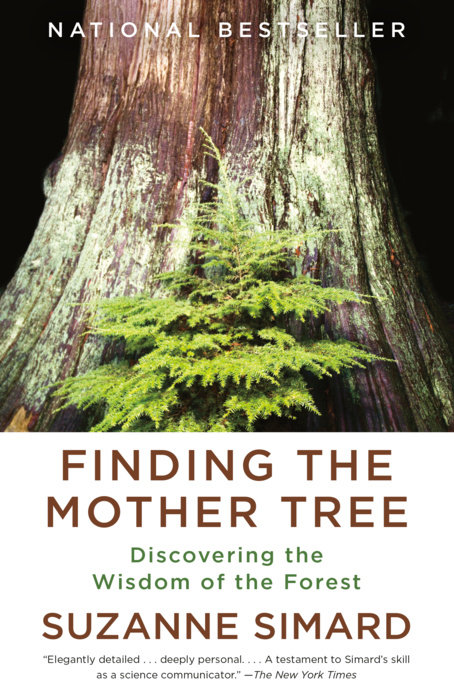
In this, her first book, Simard brings readers into her world, the intimate world of the trees, in which she brilliantly illuminates the fascinating and vital truths–that trees are not simply the source of timber or pulp, but are a complicated, interdependent circle of life; that forests are social, cooperative creatures connected through underground networks by which trees communicate their vitality and vulnerabilities with communal lives not that different from those among humans. Simard writes how trees, living side by side for hundreds of years, have evolved, how they learn and adapt their behaviors, recognize neighbors, compete and cooperate with one another with sophistication, characteristics ascribed to human intelligence, traits that are the essence of civil societies–and at the center of it all, the Mother Trees: the mysterious, powerful forces that connect and sustain the others that surround them.

“I was tired of speed. I wanted to live to tree time.” So writes Sumana Roy at the start of How I Became a Tree, her captivating, adventurous, and self-reflective vision of what it means to be human in the natural world. Drawn to trees’ wisdom, their nonviolent way of being, their ability to cope with loneliness and pain, Roy movingly explores the lessons that writers, painters, photographers, scientists, and spiritual figures have gleaned through their engagement with trees–from Rabindranath Tagore to Tomas Tranströmer, Ovid to Octavio Paz, William Shakespeare to Margaret Atwood. Her stunning meditations on forests, plant life, time, self, and the exhaustion of being human evoke the spacious, relaxed rhythms of the trees themselves. Hailed upon its original publication in India as “a love song to plants and trees” and “an ode to all that is unnoticed, ill, neglected, and yet resilient,” How I Became a Tree blends literary history, theology, philosophy, botany, and more, and ultimately prompts readers to slow down and to imagine a reenchanted world in which humans live more like trees.
Memory and Learning in Plants
Frantisek Baluska, Monica Gagliano, Guenther Witzany
Springer Cham
2018
This book assembles recent research on memory and learning in plants. Organisms that share a capability to store information about experiences in the past have an actively generated background resource on which they can compare and evaluate coming experiences in order to react faster or even better. This is an essential tool for all adaptation purposes. Such memory/learning skills can be found from bacteria up to fungi, animals and plants, although until recently it had been mentioned only as capabilities of higher animals. With the rise of epigenetics the context dependent marking of experiences on the genetic level is an essential perspective to understand memory and learning in organisms.
David Haskell has won acclaim for eloquent writing and deep engagement with the natural world. Now, he brings his powers of observation to the biological networks that surround all species, including humans. Haskell repeatedly visits a dozen trees, exploring connections with people, microbes, fungi, and other plants and animals. He takes readers to trees in cities (from Manhattan to Jerusalem), forests (Amazonian, North American, and boreal) and areas on the front lines of environmental change (eroding coastlines, burned mountainsides, and war zones). In each place he shows how human history, ecology, and well-being are intimately intertwined with the lives of trees. Scientific, lyrical, and contemplative, Haskell reveals the biological connections that underpin all life. In a world beset by barriers, he reminds readers that life’s substance and beauty emerge from relationship and interdependence.
The Revolutionary Genius of Plants: A New Understanding of Plant Intelligence and Behavior
Stefano Mancuso
Atria Books
2018
On the forefront of uncovering the essential truths about plants, world-renowned scientist Stefano Mancuso reveals the surprisingly sophisticated ability of plants to innovate, to remember, and to learn, offering humans creative solutions to the most vexing technological and ecological problems they face today. Despite not having brains or central nervous systems, plants perceive their surroundings with an even greater sensitivity than animals. They efficiently explore and react promptly to potentially damaging external events thanks to their cooperative, shared systems; without any central command centers, they are able to remember prior catastrophic events and to actively adapt to new ones.

The Hidden Life of Trees: What They Feel, How They Communicate – Discoveries from a Secret World
Peter Wohlleben
Greystone Books
2016
Are trees social beings? In The Hidden Life of Trees forester and author Peter Wohlleben convincingly makes the case that, yes, the forest is a social network. He draws on groundbreaking scientific discoveries to describe how trees are like human families: tree parents live together with their children, communicate with them, support them as they grow, share nutrients with those who are sick or struggling, and even warn each other of impending dangers. Wohlleben also shares his deep love of woods and forests, explaining the amazing processes of life, death, and regeneration that he has observed in his woodland.
Braiding Sweetgrass: Indigenous Wisdom, Scientific Knowledge and the Teachings of Plants
Robin Wall Kimmerer
Milkweed Editions
2013
In Braiding Sweetgrass, Potawatomi botanist Robin Wall Kimmerer offers an inspired weaving of Indigenous knowledge, plant science, and personal narrative. As a botanist and professor of plant ecology, Robin Wall Kimmerer has spent a career learning how to ask questions of nature using the tools of science. As a Potawatomi woman, she learned from elders, family, and history that the Potawatomi, as well as a majority of other cultures Indigenous to this land, consider plants and animals to be humanity’s oldest teachers. As she explores these themes she circles toward a central argument: the awakening of a wider ecological consciousness requires the acknowledgement and celebration of reciprocal relationships with the world.
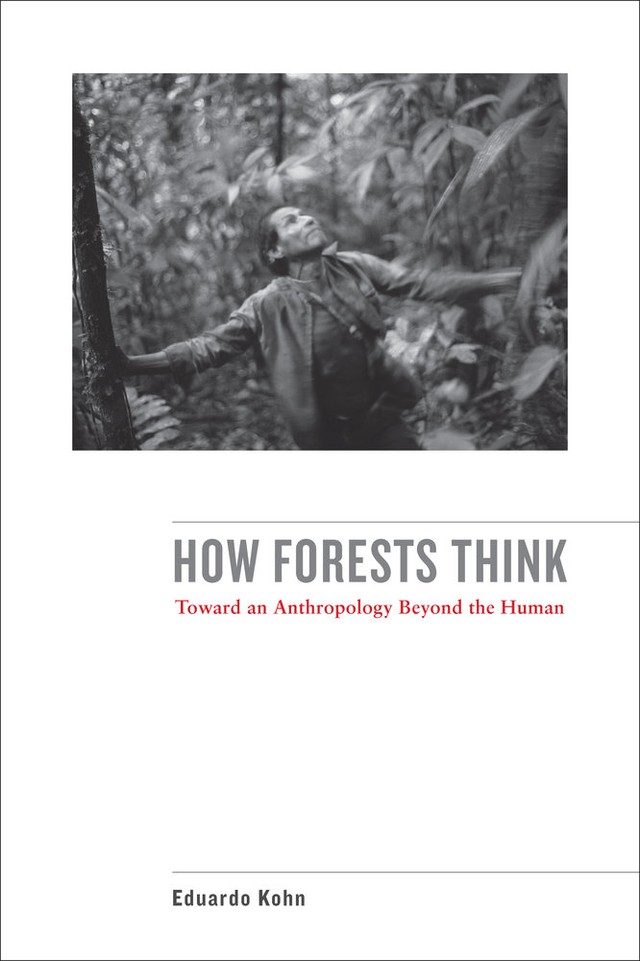
How Forests Think: Toward an Anthropology Beyond the Human
Eduardo Kohn
University of California Press
2013
Can forests think? Do dogs dream? In this astonishing book, Eduardo Kohn challenges the very foundations of anthropology, calling into question the central assumptions about what it means to be human–and thus distinct from all other life forms. Based on four years of fieldwork among the Runa of Ecuador’s Upper Amazon, Eduardo Kohn draws on his rich ethnography to explore how Amazonians interact with the many creatures that inhabit one of the world’s most complex ecosystems. Whether or not humans recognize it, their anthropological tools hinge on those capacities that make them distinctly human. However, when ethnographic attention is turned to how they relate to other kinds of beings, these tools (which have the effect of divorcing humans from the rest of the world) break down. How Forests Think seizes on this breakdown as an opportunity. Avoiding reductionistic solutions, and without losing sight of how human lives and those of others are caught up in the moral webs they spin, this book skillfully fashions new kinds of conceptual tools from the strange and unexpected properties of the living world itself. In this groundbreaking work, Kohn takes anthropology in a new and exciting direction–one that offers a more capacious way to think about the world humans share with other kinds of beings.

Michael Marder identifies the existential features of plant behavior and the vegetal heritage of human thought so as to affirm the potential of vegetation to resist the logic of totalization and to exceed the narrow confines of instrumentality. Reconstructing the life of plants “after metaphysics,” Marder focuses on their unique temporality, freedom, and material knowledge or wisdom. In his formulation, “plant-thinking” is the non-cognitive, non-ideational, and non-imagistic mode of thinking proper to plants, as much as the process of bringing human thought itself back to its roots and rendering it plantlike.
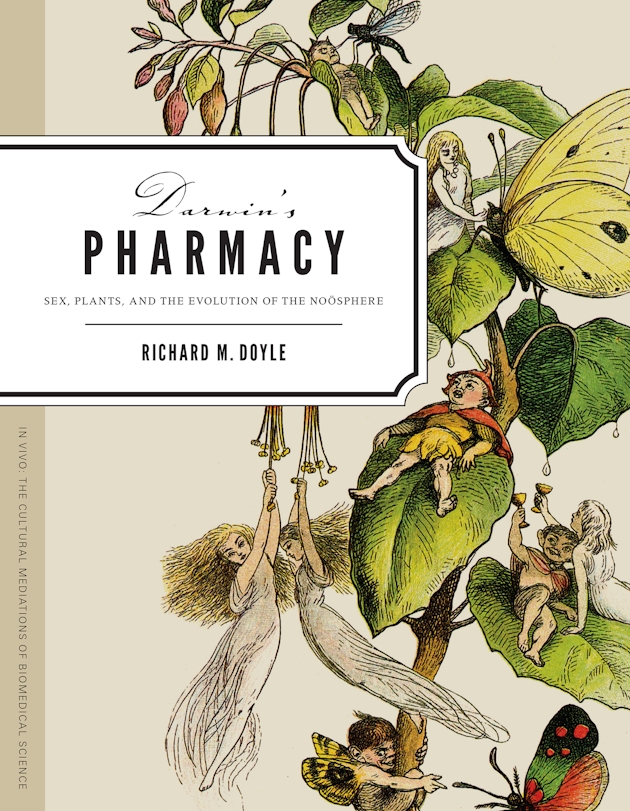
Darwin's Pharmacy: Sex, Plants, and the Evolution of the Noosphere
Richard M. Doyle
University of Washington Press
2011
Are humans unwitting partners in evolution with psychedelic plants? Darwin’s Pharmacy shows they are by weaving the evolutionary theory of sexual selection and the study of rhetoric together with the science and literature of psychedelic drugs. Long suppressed as components of the human tool kit, psychedelic plants can be usefully modeled as “eloquence adjuncts” that intensify a crucial component of sexual selection in humans: discourse. Psychedelic plants seduce partakers to interact with them, building an ongoing interdependence: rhetoric as evolutionary mechanism. In doing so, they engage humans’ awareness of the noosphere, or thinking stratum of the Earth. The realization that the human organism is part of an interconnected ecosystem is an apprehension of immanence that could ultimately benefit the planet and its inhabitants. To explore the rhetoric of the psychedelic experience and its significance to evolution, Doyle takes his readers on an epic journey through the writings of William Burroughs and Kary Mullis, the work of ethnobotanists and anthropologists, and anonymous trip reports. The results offer surprising insights into evolutionary theory, the war on drugs, the internet, and the nature of human consciousness itself.

In this work of philosophical botany Matthew Hall challenges readers to reconsider the moral standing of plants, arguing that they are other-than-human persons. Plants constitute the bulk of visible biomass, underpin all natural ecosystems, and make life on Earth possible. Yet plants are considered passive and insensitive beings rightly placed outside moral consideration. As the human assault on nature continues, more ethical behavior toward plants is needed. Hall surveys Western, Eastern, Pagan, and Indigenous thought as well as modern science for attitudes toward plants, noting the particular resources for plant personhood and those modes of thought which most exclude plants. The most hierarchical systems typically put plants at the bottom, but Hall finds much to support a more positive view of plants. Indeed, some Indigenous animisms actually recognize plants as relational, intelligent beings who are the appropriate recipients of care and respect. New scientific findings encourage this perspective, revealing that plants possess many of the capacities of sentience and mentality traditionally denied them.

Gathering Moss: A Natural and Cultural History of Mosses
Robin Wall Kimmerer
Oregon State University Press
2003
Gathering Moss is a beautifully written mix of science and personal reflection that invites readers to explore and learn from the elegantly simple lives of mosses. In this series of linked personal essays, Robin Wall Kimmerer leads general readers and scientists alike to an understanding of how mosses live and how their lives are intertwined with the lives of countless other beings. Kimmerer explains the biology of mosses clearly and artfully, while at the same time reflecting on what these fascinating organisms have to teach us. Drawing on her diverse experiences as a scientist, mother, teacher, and writer of Native American heritage, Kimmerer explains the stories of mosses in scientific terms as well as in the framework of Indigenous ways of knowing. In her book, the natural history and cultural relationships of mosses become a powerful metaphor for ways of living in the world.
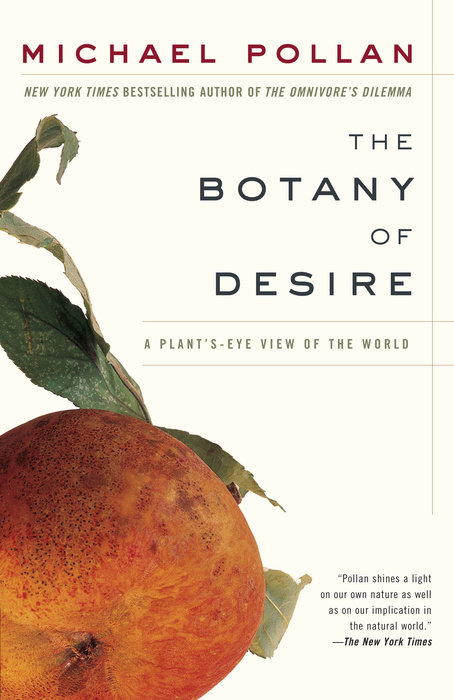
Every schoolchild learns about the mutually beneficial dance of honeybees and flowers: The bee collects nectar and pollen to make honey and, in the process, spreads the flowers’ genes far and wide. In The Botany of Desire, Michael Pollan demonstrates how people and domesticated plants have formed a similarly reciprocal relationship. He links four fundamental human desires–sweetness, beauty, intoxication, and control–with the plants that satisfy them: the apple, the tulip, marijuana, and the potato. In telling the stories of four familiar species, Pollan illustrates how the plants have evolved to satisfy humankind’s most basic yearnings and how the relationship has been mutually beneficial.
Photo Credit: lee71489650/Pixabay