New Materialisms: Books
Further resources, if available, can be found in our full bibliography.
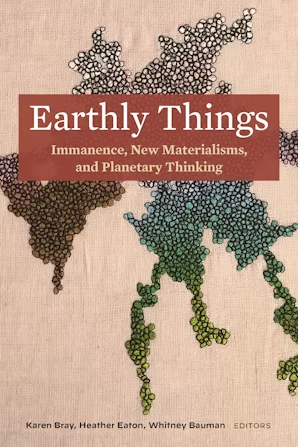
Earthly Things: Immanence, New Materialisms, and Planetary Thinking
Karen Bray, Heather Eaton, Whitney Bauman
Fordham University Press
2023
Earthly Things: Immanence, New Materialisms, and Planetary Thinking, argues that more immanent or planetary ways of thinking and acting have great potential for re-thinking human-technology-animal-Earth relationships and for addressing problems of global climate weirding and other forms of ecological degradation. Older and often-marginalized forms of thought from animisms, shamanisms, and other religious traditions are joined by more recent forms of thinking with immanence such as the universe story, process thought, emergence theory, the new materialisms (NM’s), object-oriented ontologies (OOO’s), affect theory, and queer theory. This book maps out some of the connections and differences between immanent frameworks to provide some eco-intellectual commons for thinking within the planetary community, with a particular emphasis on making connections between more recent theories and older ideas of immanence found in many of the world’s religious traditions. The authors in this volume met and worked together over five years, so the resulting volume reveals sustained and multifaceted perspectives on “thinking and acting with the planet.”

The volume explores how debates concerning the new materialisms impinge on religious traditions and the extent to which religions, with their material culture and beliefs in the Divine within the material, can make a creative contribution to debates about ecological materialisms. Spanning a broad range of themes, including politics, architecture, hermeneutics, literature and religion, the book brings together a series of discussions on materialism in the context of diverse methodologies and approaches. The volume investigates a range of issues including space and place, hierarchy and relationality, the relationship between nature and society, human and other agencies, and worldviews and cultural values.
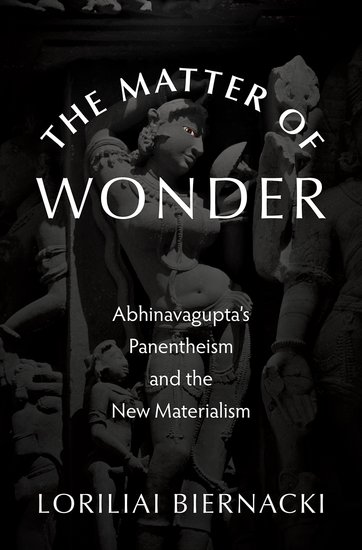
The Matter of Wonder: Abhinavagupta's Panentheism and the New Materialism
Loriliai Biernacki
Oxford University Press
2023
In the early 11th century, the Kashmiri philosopher Abhinavagupta proposed panentheism—seeing the divine as both immanent in the world and at the same time as transcendent—as a way to reclaim the material world as something real, something solid. His theology understood the world itself, with its manifold inhabitants—from gods to humans to insects down to the merest rock—as part of the unfolding of a single conscious reality, Siva. This conscious singularity—the word “god” here does not quite do it justice–with its capacity to choose and will, pervades all through, top to bottom. As Abhinavagupta writes, “even down to a worm–when they do their own deeds, that which is to be done first stirs in the heart.” His panentheism proposed an answer to a familiar conundrum, one that humans still grapple with today: Consciousness is so unlike matter. How does consciousness actually connect to the materiality of this world? To put this in more familiar twenty-first-century terms, how does mind connect to body?

This work articulates the main problems and questions that arise at the intersection of new materialism and theology. The text is divided into three parts. Part 1 provides some introductory definitions and historical context for understanding the relationship between new materialism and theology. Part 2 examines the novelty and materiality in new materialism, questioning both categories, while enumerating very new and quite material challenges that new materialism poses to theology. The concluding part considers the theological implications and material possibilities of technological developments for facilitating posthuman or transhuman futures.

Entangled Worlds: Religion, Science, and New Materialisms
Catherine Keller, Mary-Jane Rubenstein
Fordham University Press
2017
While both theology and religious studies have over the past few decades come to prioritize the material contexts and bodily ecologies of more-than-human life, Entangled Worlds sets forth the first multivocal conversation between religious studies, theology, and the body of “the new materialism.” Here disciplines and traditions touch, transgress, and contaminate one another across their several carefully specified contexts. And in the responsiveness of this mutual touching of science, religion, philosophy, and theology, the growing complexity of human entanglements takes on a consistent ethical texture of urgency.
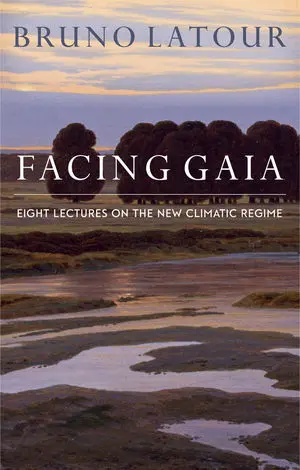
This book explores a model proposed by James Lovelock when he chose the name “Gaia” for the fragile, complex system through which living phenomena modify the Earth. The fact that he was immediately misunderstood proves simply that his readers have tried to fit this new notion into an older frame, transforming Gaia into a single organism, a kind of giant thermostat, some sort of New Age goddess, or even divine Providence. In this series of lectures on “natural religion,” Bruno Latour argues that the complex and ambiguous figure of Gaia offers, on the contrary, an ideal way to disentangle the ethical, political, theological, and scientific aspects of the now obsolete notion of nature. He lays the groundwork for a future collaboration among scientists, theologians, activists, and artists as they, and we, begin to adjust to the new climatic regime.
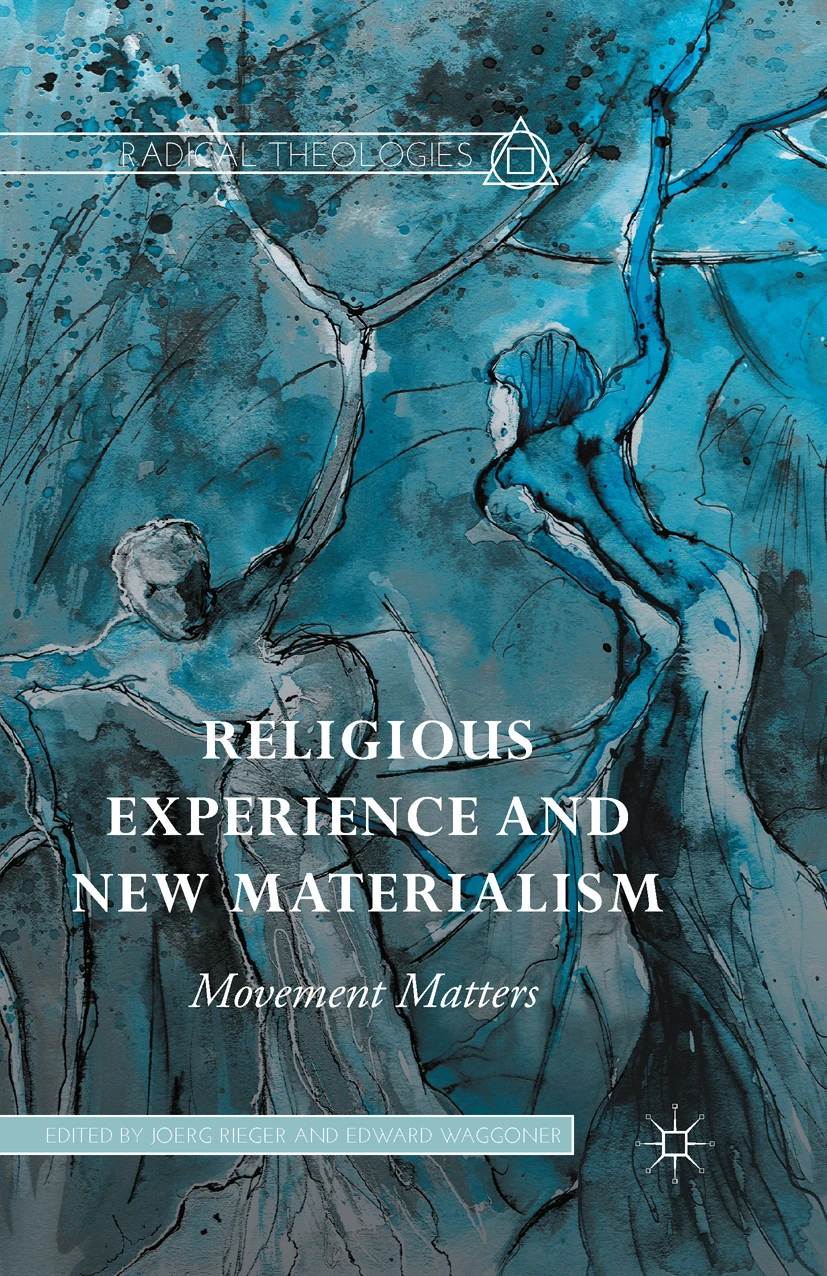
Religious Experience and New Materialism: Movement Matters
Joerg Rieger, Edward Waggoner
Palgrave Mcmillan
2015
In this groundbreaking volume, theologians and scholars of religion criticize and refine new materialist views, to advance debate about the role of religious experience in social and political change.

New Materialism: Interviews & Cartographies
Rick Dolphijn, Iris van der Tuin
Open Humanities Press
2012
This book is the first monograph on the theme of “new materialism,” an emerging trend in 21st century thought that has already left its mark in such fields as philosophy, cultural theory, feminism, science studies, and the arts. The first part of the book contains elaborate interviews with some of the most prominent new materialist scholars of today: Rosi Braidotti, Manuel DeLanda, Karen Barad, and Quentin Meillassoux. The second part situates the new materialist tradition in contemporary thought by singling out its transversal methodology, its position on sexual differing, and by developing the ethical and political consequences of new materialism.

New Materialisms: Ontology, Agency, and Politics
Diana Coole, Samantha Frost
Duke University Press
2010
New Materialisms brings into focus and explains the significance of the innovative materialist critiques that are emerging across the social sciences and humanities. By gathering essays that exemplify the new thinking about matter and processes of materialization, this important collection shows how scholars are reworking older materialist traditions, contemporary theoretical debates, and advances in scientific knowledge to address pressing ethical and political challenges. In the introduction, Diana Coole and Samantha Frost highlight common themes among the distinctive critical projects that comprise the new materialisms. The continuities they discern include a posthumanist conception of matter as lively or exhibiting agency, and a reengagement with both the material realities of everyday life and broader geopolitical and socioeconomic structures.
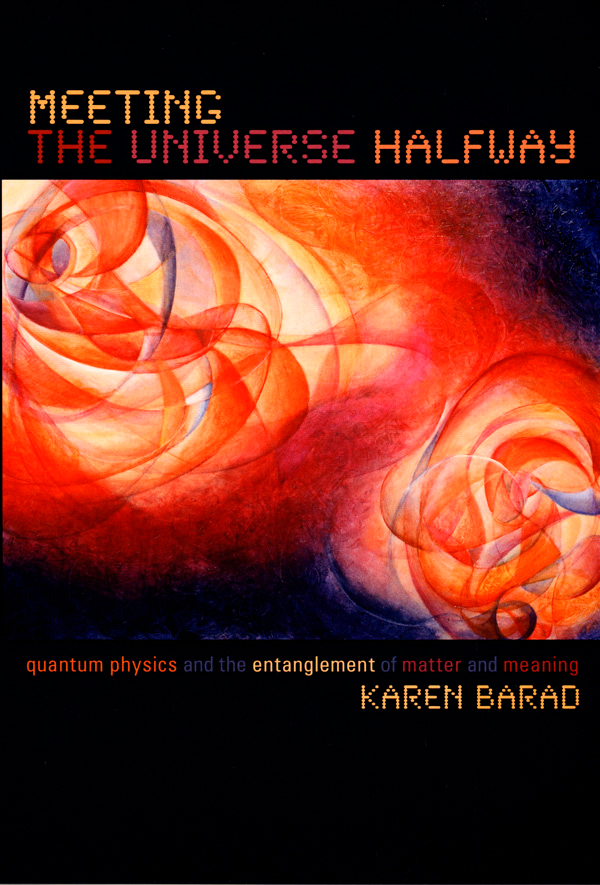
Meeting the Universe Halfway: Quantum Physics and the Entanglement of Matter and Meaning
Karen Barad
Duke University Press
2007
Meeting the Universe Halfway is an ambitious book with far-reaching implications for numerous fields in the natural sciences, social sciences, and humanities. In this volume, Karen Barad, theoretical physicist and feminist theorist, elaborates her theory of agential realism. Offering an account of the world as a whole rather than as composed of separate natural and social realms, agential realism is at once a new epistemology, ontology, and ethics. The starting point for Barad’s analysis is the philosophical framework of quantum physicist Niels Bohr. Barad extends and partially revises Bohr’s philosophical views in light of current scholarship in physics, science studies, and the philosophy of science as well as feminist, poststructuralist, and other critical social theories. In the process, she significantly reworks understandings of space, time, matter, causality, agency, subjectivity, and objectivity.
Photo Credit: Seisenberg Gorge, Weißbach, Lofer, Oberweissbach, Austria; Markus Spiske/Unsplash